

History
The History of the Fire Service in Ireland
- Home
- /
- The Irish Fire Service
- /
- History
The Story of Firefighting in Ireland
Long before fire engines and flashing lights, people in Ireland faced fire with very little.
The Early Days
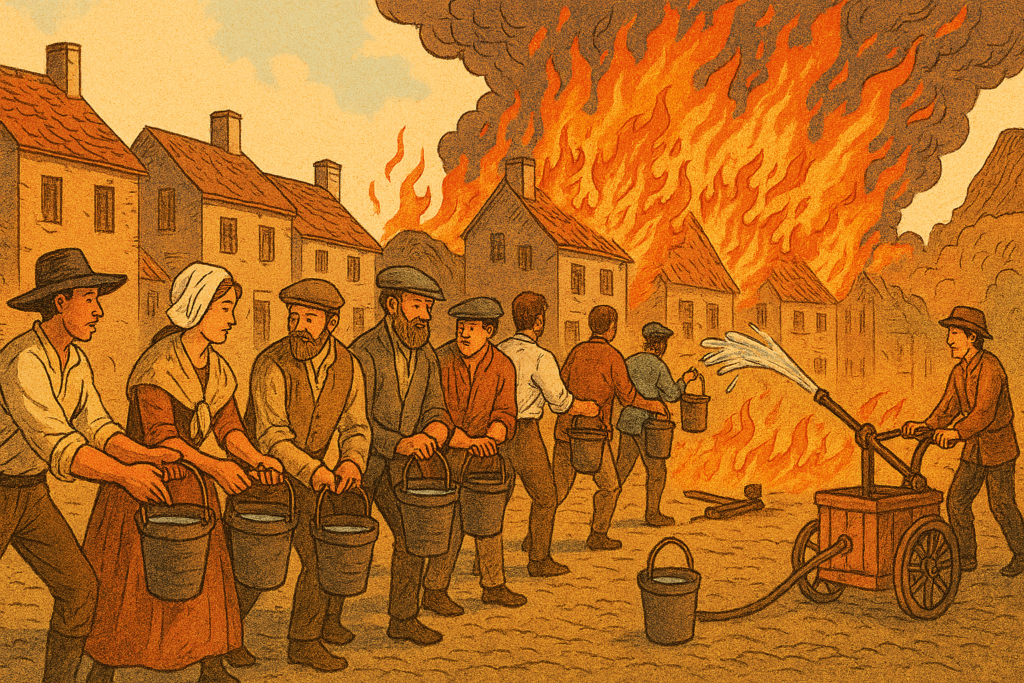
Hundreds of years ago, if a fire started in a town or village, there were no firefighters to call. Instead, neighbours rushed together with buckets of water, passing them hand to hand in long lines. People used simple hand pumps and whatever tools they had to try and stop the flames. Fires were dangerous and often spread quickly through homes and streets.
The First Fire Brigades
As towns grew, a new idea appeared. Insurance companies began creating their own fire brigades to protect the buildings they insured. If a building had fire insurance, it would be saved first. These were the first organised fire crews in Ireland, but they didn’t always protect everyone equally.
A Turning Point – Dublin, 1862
Everything changed in 1862. Dublin created a single, unified fire brigade to protect the whole city — not just insured buildings. For the first time, firefighting became a public service, focused on protecting everyone. This was the beginning of the modern fire service in Ireland.
A New Era of Firefighting
As the years passed, firefighting became more advanced. Horses and carts were replaced by powerful fire engines. Water systems improved, and firefighters were trained to respond faster and more effectively. Firefighting was no longer just a reaction, it became a skilled profession.
After Ireland became independent, fire services developed across the country. Local authorities took responsibility for protecting their communities. Fire stations appeared in towns and rural areas, supported by full-time and part-time firefighters. Communities became safer, and fire services became part of everyday life.
The Law That Shaped Today’s Service
The Fire Brigades Act, 1940 was the basis for the first countrywide fire-fighting system. This made it mandatory for local authorities, urban and rural, to make sure there was a group in place to respond to fires in their area and to try to keep people safe.
In 1981, a major step forward was taken. The Fire Services Act was introduced, setting out clear roles and responsibilities. Firefighters were no longer just there to put out fires, they also worked to:
- Prevent fires
- Inspect buildings
- Educate the public
This law helped create the modern service we know today.
Firefighters Today
Today, firefighters in Ireland do much more than fight fires. They respond to:
- House fires
- Road traffic accidents
- Floods and storms
- Dangerous situations involving chemicals
They train constantly and work day and night to keep communities safe.
Protecting Communities Together
Across Ireland, fire services are run by local authorities, supported nationally by experts who ensure training, planning, and safety standards. Many firefighters, especially in rural areas, serve their communities as retained firefighters, ready to respond at a moment’s notice.
And Today… Rua Helps Too
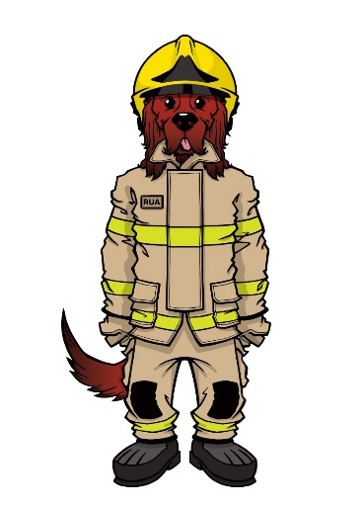
Now, there’s even a new kind of firefighter helping to keep people safe. Rua the Firehound visits schools and communities, teaching children how to stay safe at home. Because today, fire safety isn’t just about responding to fires, it’s about preventing them before they start

From buckets of water to modern fire engines…
From small villages to a nationwide service…
The mission has always been the same:
Protect lives. Protect homes. Never give fire a chance.